
Last Updated: November 8, 2026
Quick Summary
For an evening routine, choose naturally caffeine-free tea such as rooibos, chamomile, lavender and lemon balm blends, peppermint, or fruity hibiscus blends. These herbal infusions never contained caffeine, unlike decaffeinated tea, which still carries a small residual amount. Match the cup to your taste and steep it at the same time each night.
- Rooibos is naturally sweet and needs no sugar or honey.
- Steep rooibos in water around 212 F for five to seven minutes.
- Chamomile steeps at about 200 F for five minutes with the cup covered.
- Keep lavender as a supporting note so the cup does not taste soapy.
- Check blend labels for black tea, green tea, oolong, or matcha.
Table of Contents
- Why Caffeine-Free Tea Belongs in Your Evening Routine
- 1. Rooibos Tea: The Smooth, Naturally Sweet Base
- 2. Chamomile Tea: The Classic Bedtime Herbal
- 3. Lavender and Lemon Balm Blends for Winding Down
- 4. Peppermint Tea: A Gentle Evening Option
- 5. Fruity Herbal Blends for a Bedtime Routine You'll Keep
- The Best Tea for Sleep and Digestion: What to Expect Realistically
- Safety First: Medication Interactions and Allergies
- Frequently Asked Questions
Why Caffeine-Free Tea Belongs in Your Evening Routine
A warm cup of caffeine-free tea is one of the simplest ways to signal to your body that the day is winding down.
Here is the honest truth most guides skip: caffeine is not the only reason a late cup keeps you up. The habit of a hot drink, the pause it forces, and the flavor you look forward to all matter. Below, we walk through five caffeine-free tea options for evening routines, how each one brews, and what to expect realistically.
Naturally Caffeine-Free vs. Decaffeinated: What's the Difference
Naturally caffeine-free tea is an herbal infusion made from plants that never contained caffeine in the first place. Decaffeinated tea starts as true tea leaves, then goes through a process that removes most, but not all, of the caffeine.
That distinction changes what you are drinking. Herbal infusions like rooibos, chamomile, and peppermint are not true teas at all. They are made from dried herbs, flowers, roots, and fruit.
For an evening cup, we recommend naturally caffeine-free options. You skip the guesswork entirely.
How to Choose a Tea Based on Taste and Routine
Match the tea to the moment, not the marketing. A few practical filters help:
- Sweet and smooth: rooibos, which needs no sugar
- Floral and light: chamomile
- Herbal and calming: lavender and lemon balm blends
- Cool and clean: peppermint
- Fruity and bright: hibiscus and berry blends
Think about your routine too. If you read for twenty minutes before bed, a tea that stays warm in a ceramic mug suits you. If you want something you can sip slowly, a full-bodied blend holds up better than a delicate one. Browsing a collection of blends is often the fastest way to find one that matches your taste and your evenings.
Match the tea to the moment with these quick taste and routine filters.
| Taste profile | Recommended tea |
|---|---|
| Sweet and smooth | Rooibos, which needs no sugar |
| Floral and light | Chamomile |
| Herbal and calming | Lavender and lemon balm blends |
| Cool and clean | Peppermint |
| Fruity and bright | Hibiscus and berry blends |
1. Rooibos Tea: The Smooth, Naturally Sweet Base
Rooibos tea is the easiest starting point for most people, and it is our first pick. Grown in South Africa and often called red bush tea, rooibos brews into a ruby-red cup with a naturally sweet, slightly nutty flavor.
What makes it a strong evening choice is that it is naturally caffeine-free from the leaf, not processed to remove caffeine. It also takes milk well, which is unusual for an herbal infusion.
Our Apple Cider Rooibos builds on that base with cinnamon, orange peel, and natural spices. It is spicy and sweet, and it can be enjoyed year round.

Brewing Rooibos for a Warm Evening Cup
Use one heaping teaspoon of loose rooibos per cup. Pour water just off the boil, around 212 F, and steep for five to seven minutes. Rooibos does not turn bitter if you leave it a little longer, which makes it forgiving for beginners.
Watch out: if you add milk, warm it first. Cold milk drops the temperature of the cup quickly and mutes the aroma.
2. Chamomile Tea: The Classic Bedtime Herbal
Chamomile tea is the most recognized bedtime herbal, and for good reason. It has a soft, apple-like floral aroma and a gentle flavor that most people find soothing. It has been a standard evening infusion in many households for generations.
Is Chamomile Tea Caffeine-Free?
Yes. Chamomile tea is caffeine-free because it is an herbal infusion made from dried chamomile flowers, not from the tea plant. A cup of pure chamomile contains no caffeine at all.
One practical note: check the label on blends. Some "chamomile" products mix in true tea leaves, which reintroduce caffeine. Buy single-ingredient chamomile or a blend that lists only herbs.
Steep chamomile at around 200 F for five minutes and cover the cup while it steeps. The flowers release aromatic oils, and a lid keeps them in the cup rather than in the air.
3. Lavender and Lemon Balm Blends for Winding Down
Lavender and lemon balm are the two herbs most associated with calming evening blends. Lavender brings a floral, perfumed note. Lemon balm adds a bright, citrus-like flavor with a soft herbal finish. Together they make a cup that smells like a garden at dusk.
The trick with lavender is restraint. Too much and the cup tastes like soap. A good blend uses lavender as a supporting note, not the star. If you are new to it, start with a blend rather than loose lavender buds. Lemon balm is gentler and more forgiving. It pairs well with chamomile and peppermint.
Brewing Lavender and Lemon Balm Without the Soapy Aftertaste
Use about one teaspoon of dried lavender buds per cup only if you are brewing lavender alone; in a blend, let the lemon balm or chamomile carry the body and treat lavender as an accent. Pour water at roughly 200 F, not a rolling boil, and steep for five to seven minutes. Cover the cup while it steeps to keep the volatile aromatic oils from escaping.
Watch out: lavender buds vary in potency from batch to batch, so a blend that tasted balanced last month may taste stronger this month. Adjust the amount, not the steep time, when you change bags.
What to Expect Realistically
Lavender and lemon balm are often enjoyed as part of a wind-down ritual. Treat the cup as a cue that the day is ending. If you are looking for a stronger sedative effect, that is a conversation for a clinician, not a tea tin.
Safety and Interactions
Lavender can cause drowsiness, so avoid combining it with sedatives, sleep medications, or alcohol without advice from a pharmacist or doctor. Check with a pharmacist if you take daily medication. If you are pregnant, nursing, or managing a health condition, ask a qualified clinician before making either herb a nightly habit. This is general guidance, not medical advice.
4. Peppermint Tea: A Gentle Evening Option
Peppermint tea is a cool, minty option on this list. It is naturally caffeine-free, and its flavor makes it a good choice after a heavy meal.
It is also the easiest to brew. Use fresh or dried peppermint leaves, pour water just off the boil, and steep for five to seven minutes. Cover the cup to keep the menthol oils from escaping.
You can try our mint tea if you want a straightforward, single-note cup.

5. Fruity Herbal Blends for a Bedtime Routine You'll Keep
The best evening tea is the one you actually look forward to drinking. That is where fruity herbal blends earn their place.
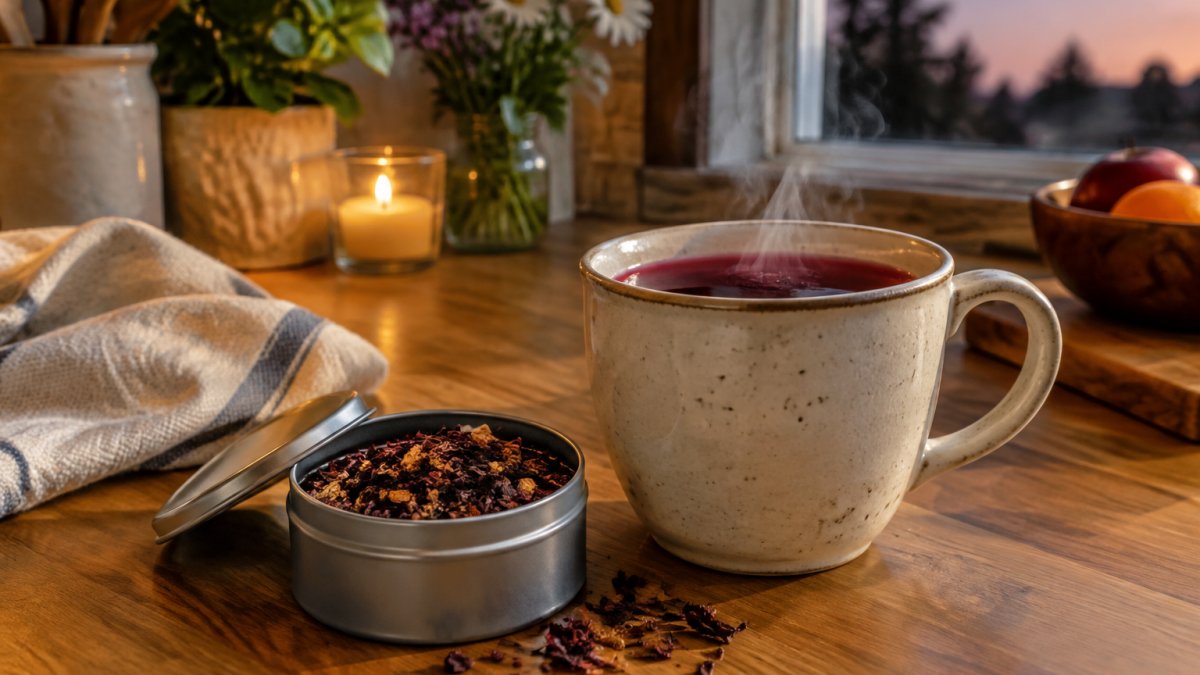
Hibiscus is a common base for fruity herbal blends. It brings a tart flavor and a deep red color.
(/products/hibiscus-berry-tea) is a good example. It is low in astringency, full-bodied, and sweet, and it can be brewed as a cold brew or western style brew.Brewing Fruity Blends for Evening
Use one heaping teaspoon of loose blend per cup, or one tea bag if that is what you have. Pour water just off the boil, around 212 F, and steep for five to ten minutes depending on how strong you like it. Hibiscus and rosehips can turn tart if oversteeped, so taste at five minutes the first time and adjust. If you want a lighter cup before bed, use less leaf rather than a shorter steep; the flavor will be gentler without turning woody.
Matching the Blend to Your Routine and Caffeine Sensitivity
Fruity blends suit readers who want a drink that feels like a treat. Because these are herbal infusions, they contain no caffeine from the tea plant. If you are unsure whether a blend is truly caffeine-free, check the ingredient list for words like black tea, green tea, oolong, or matcha; those reintroduce caffeine even in small amounts.
Safety Notes for Fruity Herbal Blends
If you take medication or have allergies, check the ingredient list and talk to a qualified clinician before making a herbal tea a daily habit. If you are pregnant, nursing, or managing a health condition, talk to a qualified clinician before making any herbal tea a regular evening routine. This is general guidance, not medical advice.
A fruity cup also helps build the habit. When the drink is genuinely pleasant, the evening routine sticks.
The Best Tea for Sleep and Digestion: What to Expect Realistically
No tea is a sleep aid in the medical sense, and we will not pretend otherwise. What a warm caffeine-free cup does well is support the conditions for rest: it replaces a late caffeine drink, it gives you a pause, and the warmth itself is calming.
Set realistic expectations. A cup of tea will not fix a poor sleep schedule or a late screen habit. It works best as one part of a routine that includes a consistent bedtime and less caffeine after midday.
Safety First: Medication Interactions and Allergies
Herbal teas are gentle, but "natural" does not mean "no interactions." A few honest cautions:
If you are pregnant, nursing, or managing a health condition, talk to a healthcare professional before making herbal tea a daily habit. This is general guidance, not medical advice.
Your evening routine deserves a cup you actually enjoy. At Veteran Beans, we roast in small batches, source from trusted growers around the world, and offer naturally caffeine-free teas like Apple Cider Rooibos and Hibiscus Berry Tea, plus BPA and lead-free ceramic mugs. Start with one blend, brew it at the same time each night, and let the ritual do its quiet work. Get started with Veteran Beans and build an evening cup worth slowing down for.
Frequently Asked Questions
What is the best caffeine-free tea to drink at night?
There is no single best option, because the right pick depends on your taste and routine. Chamomile tea is a familiar evening choice, while rooibos tea offers a smooth, naturally sweet base. Lavender, lemon balm, and peppermint blends each bring a different aroma. Try one cup about an hour before bed, keep the brew gentle, and pick the flavor you will actually look forward to drinking.
Is chamomile tea caffeine-free?
Yes. Chamomile tea is an herbal infusion made from the flowers of the chamomile plant, not from the leaves of the tea plant, so it contains no caffeine at all. This is different from decaffeinated tea, which starts as true tea and has most of its caffeine removed through a processing step. If you want a cup with zero caffeine rather than reduced caffeine, an herbal option like chamomile is the straightforward choice.
What is the healthiest tea to drink daily without caffeine?
Rooibos tea is a naturally caffeine-free option with a mild flavor that many people enjoy hot or iced without added sugar. The best choice for daily drinking is the one you enjoy most. Anyone taking medication or managing a health condition should check with a pharmacist before making an herbal tea a daily habit.
Which caffeine-free teas are good for an evening routine?
Chamomile, rooibos, lavender, lemon balm, and peppermint are the most common picks for winding down. Each is an herbal infusion with no caffeine, and each brings a different aroma and flavor. A practical approach is to match the tea to your mood: floral blends for a quiet wind-down, minty cups after a heavy meal, and fruity herbal blends when you want something sweet without dessert. Brew a single cup and keep the ritual simple.
