
Last Updated: November 7, 2026
Quick Summary
The best coffee beans for black coffee drinkers are fresh, small-batch beans matched to how you brew. Start with a medium roast like our House Blend for a balanced cup, choose light for brightness, or dark for body and low acidity.
- 24% of respondents preferred black coffee in 2026, up from 18% in 2024.
- Medium roast is the safest starting point for black coffee drinkers.
- The House Blend is a medium roast with nutty sweetness, sweet chocolate, and mild citrus.
- Check for a roast date, not a best-by date, when buying from a shelf.
- Start with roughly 1 to 2 tablespoons of ground coffee per 180 ml of water.
Table of Contents
- Why Black Coffee Drinkers Need Better Beans
- Best Coffee Beans for Black Coffee Drinkers: Quick Comparison
- Best Medium-Roast Coffee Beans for a Smooth, Balanced Cup
- How Roast Level Changes Black Coffee Flavor
- Best Grocery Store Coffee Brands to Drink Black
- How to Make Black Coffee Taste Good
- Best Black Coffee for Health
- Choosing Your Next Bag of Veteran Beans
- Frequently Asked Questions
Why Black Coffee Drinkers Need Better Beans
Black coffee is the fastest way to taste what a bean actually is. Milk, sugar, and syrups hide defects, but a plain cup exposes everything: roast faults, stale beans, weak extraction.
Interest in drinking it black is climbing. According to Drive Research's 2026 coffee survey, 24% of respondents said they prefer coffee black in 2026, up from 18% in 2024.
At Veteran Beans, we roast in small batches, because a black cup has nowhere to hide a stale bean.
What Black Coffee Reveals That Milk Hides
Milk fat coats the tongue and mutes bitterness, acidity, and aroma all at once. Strip it away and three things become obvious:
- Freshness. Stale beans taste flat and papery. Fresh beans smell sweet and bready when ground.
- Roast accuracy. An uneven roast shows up as harsh, scorched notes in a black cup.
- Origin character. Fruity, citrusy, chocolatey notes only register when nothing is masking them.
A common mistake is blaming black coffee itself for tasting harsh. Usually the problem is the bean, not the method.
How We Evaluated These Beans
We judge beans for black drinking on criteria such as roast level and tasting notes.
Freshness matters most when judging a black cup. If you want to taste several beans side by side, the single origin favorites sample pack is one way to do it.
Best Coffee Beans for Black Coffee Drinkers: Quick Comparison
Here is how our beans line up for black drinking, from lightest to darkest:
| Bean | Roast Level | Tasting Notes | Best For | Price |
|---|---|---|---|---|
| Breakfast Blend | Light | Walnuts, mild apple, toffee | Pour-over, drip | $18.99 |
| House Blend | Medium | Nutty, sweet chocolate, mild citrus | Drip, French press | $18.99 |
| Cowboy Blend | Medium and dark | Cocoa, caramel, vanilla | Drip, espresso | $24.99 |
| 6 Bean Blend | Dark | Rich, rounded, bittersweet | Espresso, French press | $18.99 |
| French Roast | Dark | Bittersweet, low acidity | French press, drip | $18.99 |
| Italian Roast | Darkest | Intense, bold, roasty | Espresso, stovetop | $18.99 |
If you want to browse the full range before deciding, shop all coffee and compare bags side by side.
Best Medium-Roast Coffee Beans for a Smooth, Balanced Cup
Medium roast is the safest starting point for black coffee. It keeps enough acidity to taste bright but tames the sharp edges that turn some drinkers off light roasts. Our top pick for most people is the House Blend.
It is a medium roast of Central and South American coffees with a medium body and notes of nutty sweetness, sweet chocolate, and mild citrus, finishing clean and bright. The House Blend is a good bag to try if you are looking for a smooth, balanced cup.

Best for: drinkers who want a balanced, everyday black cup. Skip if: you want a heavy, smoky, dark-roast profile.
The Breakfast Blend is the lighter alternative, with walnut, apple, and toffee notes.
How Roast Level Changes Black Coffee Flavor
Roast level is the single biggest lever on how a black cup tastes. The same bean roasted light, medium, or dark produces three different drinks.
Light Roast: Bright and Complex
Light roast keeps more of the bean's origin character: fruit, citrus, floral notes, and higher acidity. It can be rewarding, but it punishes sloppy brewing. Light roasts generally require careful brewing to avoid sourness, and a medium roast is a common alternative for drinkers who want less sharpness.
Medium Roast: The Balanced Middle
Medium roast sits between brightness and body. Acidity drops a little, sweetness comes forward, and the cup tastes rounder. For most black drinkers, this is the sweet spot.
Dark Roast: Bold and Bittersweet
Dark roast brings body and low acidity, but it also brings bitterness. Harvard's Nutrition Source describes dark roasts as having little acidity and a bitter roasted flavor. If you dislike bitterness, dark roast is not your answer.
Our French Roast is a deep dark roast of high-scoring African coffees, with a bittersweet, low-acidity cup. For something even bolder, the Italian Roast is our darkest option, a slow-roasted blend of specialty-grade Arabica and Robusta.


Best Grocery Store Coffee Brands to Drink Black
Grocery store coffee is not automatically bad, but the shelf is built for shelf life, not flavor.
When you buy from a shelf, check three things in this order:
- A roast date, not a best-by date. A printed roast date is a useful freshness signal. If the bag has no roast date, it is harder to know how old the beans are.
- Whole beans rather than pre-ground. Pre-ground coffee loses aroma quickly because the surface area exposed to oxygen is far greater. Whole beans keep their volatile aromatics far longer, and a black cup is where that difference is most obvious.
- A sealed bag with a one-way valve. Some bags use a one-way valve to let carbon dioxide escape after roasting, and a sealed bag helps protect freshness.
A practical pattern many black-coffee drinkers follow is to treat grocery-store bags as a backup rather than a default.
If you want to compare a grocery bag against a freshly roasted one, brew both the same way on the same morning and taste them side by side.
How to Make Black Coffee Taste Good
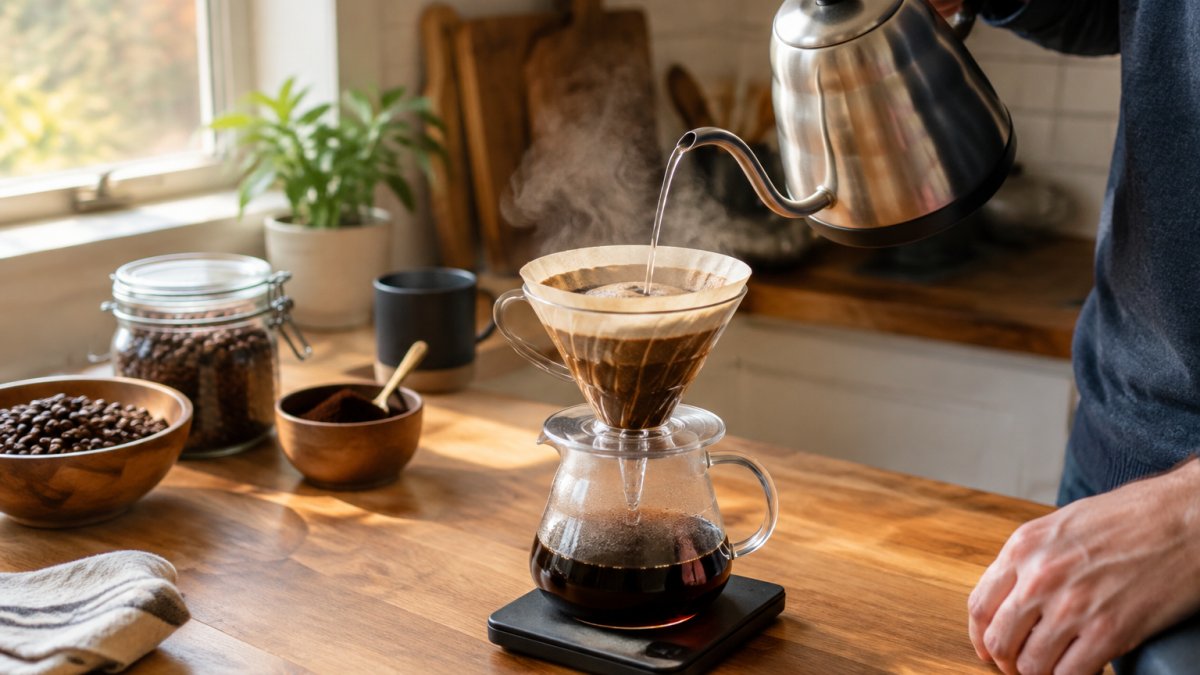
Good black coffee starts with good beans, then depends on three variables: grind size, brew ratio, and water temperature. The catch is that the right settings change with your brewing method, so the most useful approach is to match grind and recipe to how you actually brew.
Match Grind and Recipe to Your Brew Method
- Drip machine. Use a medium grind, roughly the texture of table salt. Start with about 1 to 2 tablespoons of ground coffee per 180 ml of water, or a ratio near 1:15 to 1:17 by weight if you have a scale. Drip is forgiving, but a grind that is too fine slows the flow and pulls out harsh bitterness.
- Pour-over. Use a medium-fine grind, slightly finer than drip. A common starting recipe is a 1:16 ratio, a water temperature around 90 to 96°C, and a slow, even pour in stages so the bed drains evenly. Pour-over rewards a consistent grind more than any other method.
- French press. Use a coarse grind, roughly the texture of sea salt. Steep for about four minutes, then press slowly. Because the metal mesh lets some fines through, a coarse, even grind is what keeps the cup clean rather than muddy.
- Espresso. Use a fine grind and a ratio near 1:2 (coffee to yield) as a starting point, then adjust. Espresso is the least forgiving method for stale beans; fresh beans with a recent roast date are what make the shot taste sweet rather than ashy.
Grind Size and Freshness
Grind fresh, right before brewing. Pre-ground coffee loses aroma fast, so buy whole bean when you can. If you cannot grind at home, ask the roaster to grind to your method and plan to finish the bag within a few weeks.
Brew Ratio and Water Temperature
Start with roughly 1 to 2 tablespoons of ground coffee per 180 ml of water, then adjust to taste. Water just off the boil, around 90 to 96°C, extracts sweetness without pulling out harsh bitterness.
Diagnose the Cup Instead of Guessing
Taste is the fastest feedback loop. If the cup tastes sour or thin, the coffee is under-extracted: grind finer, raise the water temperature slightly, or extend the brew time.
Watch out: changing grind, ratio, and temperature all at once makes it impossible to know which adjustment fixed the cup, so adjust one variable per brew and taste before changing another.
A black cup has nowhere to hide a stale bean, so freshness still matters more than any recipe.
Best Black Coffee for Health
Black coffee contains no added sugar, milk, or syrups, so it is the lowest-calorie way to drink coffee. The health question is mostly about caffeine and how your body handles it.
If you are sensitive to caffeine, ask your doctor about appropriate limits. If you drink several cups a day, watch total intake rather than roast color.
Choosing Your Next Bag of Veteran Beans
The best coffee beans for black coffee drinkers are fresh and matched to how you brew. Start with a medium roast if you want balance, go light if you want brightness, and choose dark if you want body and low acidity.
Ready to taste the difference freshness makes? Veteran Beans roasts in small batches and ships beans at their peak, with a range of roast profiles so you can find the cup that fits how you drink.
Frequently Asked Questions
What roast level is best for drinking coffee black?
Medium roast is the most forgiving starting point for black coffee. It keeps enough natural sweetness and acidity to stay interesting without the charred bitterness that can dominate dark roasts. That said, the right coffee beans depend on your palate: if you like bold, bittersweet cups, a dark roast like French Roast works well, while light roasts suit drinkers who want fruity, tea-like notes. Try two roast levels side by side and compare before committing to a full bag.
What percentage of coffee drinkers prefer black coffee?
In a 2026 coffee survey by Drive Research, 24% of respondents said they prefer coffee black, up 6 percentage points from 18% in 2024. The result describes stated preference and the survey did not specify sample size or method, so treat it as a directional signal rather than a precise count. It does suggest black coffee is a growing preference, which makes bean quality and roast choice more important than ever for that group.
Are medium-roast or dark-roast beans better for black coffee?
It depends on what you want from the cup. Medium-roast coffee beans tend to be balanced and smooth, with room for nutty, chocolate, and mild citrus notes to come through. Harvard's Nutrition Source describes dark roasts as having little acidity and a bitter roasted flavor, which suits drinkers who want low-acid, bold coffee but may disappoint anyone seeking delicate flavor. If you are unsure, start with a medium roast and move darker only if you want more intensity.
How do you make black coffee taste good without sugar or milk?
Start with fresh whole-bean coffee and grind it just before brewing. Use a consistent brew ratio (a good starting point is 1 to 2 tablespoons of ground coffee per 180 ml of water), and keep water temperature just below boiling. Freshness matters more than any gadget: check the roast date and store beans in an airtight container away from light. A medium roast like House Blend, with its nutty and sweet chocolate notes, is an easy starting point for drinkers new to black coffee.
Which coffee beans are highest quality for black coffee?
Look for specialty-grade Arabica, a recent roast date, and a clear origin or blend description. Single-origin coffees show a region's character, while blends can be more consistent and balanced. Processing matters too: washed beans tend to taste clean and bright, while natural beans can be fruitier. Buy from a roaster that roasts in small batches and prints the roast date on the bag, since freshness affects aroma and flavor more than almost any other factor.
