
Last Updated: November 14, 2026
Quick Summary
To verify veteran-owned businesses, check the SBA's VetCert portal for VOSB or SDVOSB certification, then cross-check SAM.gov for federal contracting claims and confirm any state certification separately. Ask for the certificate and match the legal business name, certifying agency, and expiration date.
- A business is veteran-owned when a veteran holds at least 51% and controls daily operations.
- Only official certification from a government body provides real proof of veteran ownership.
- Search VetCert by legal name, not brand name, and read status and expiration date.
- A badge image on a website proves nothing because anyone can download or recreate one.
- Re-check the official record once a year for any supplier you rely on.
Table of Contents
- Why Verifying Veteran-Owned Businesses Matters
- How to Know If a Business Is Veteran-Owned
- Veteran-Owned Business Certification: VOSB, SDVOSB, and VetCert
-
How Companies Verify Veteran Status: A Buyer's Checklist
- Step 1: Pin Down What the Business Is Actually Claiming
- Step 2: Search the SBA's VetCert Database
- Step 3: Cross-Check SAM.gov for Federal Contracting Claims
- Step 4: Confirm State Certification Separately
- Step 5: Ask for the Certificate and Match the Details
- Step 6: Re-Check Status for Ongoing Suppliers
- Red Flags and Fraud Prevention
- The Three Verification Tiers, Restated
- Using a Veteran-Owned Business Directory the Right Way
- Spotting a Genuinely Veteran-Owned Coffee Brand
- Frequently Asked Questions
Why Verifying Veteran-Owned Businesses Matters
Veteran-owned businesses generate more than $1 trillion in total revenue each year, according to the SBA Office of Advocacy's veteran ownership statistics. That number explains why so many brands now wave the veteran flag.
At Veteran Beans, we're a veteran-owned coffee company.
Below, we'll show you how to verify veteran-owned businesses in minutes, using official records instead of marketing claims.
How to Know If a Business Is Veteran-Owned
A business is veteran-owned when a veteran holds at least 51% of it and controls daily operations. But "veteran-owned" is a claim anyone can print on a label. Only certification proves it.
That gap is the whole problem. Three very different things get called "veteran-owned," and they carry very different weight.
Self-Identified, Directory-Listed, and Officially Certified
Self-identified means the owner says so. No paperwork, no review. It may be completely true, but nothing checks it.
Directory-listed means the business appears in a veteran-owned business directory. Many accept self-submitted listings.
Officially certified means a government body reviewed ownership documents and approved the business. That's the only tier with real proof behind it.
| Status | Who Confirms It | Proof Level | Good For |
|---|---|---|---|
| Self-identified | The owner | None | General marketing |
| Directory-listed | A directory | Low | Discovery and search |
| Officially certified | SBA or state agency | High | Contracts, procurement |
Veteran-Owned Business Certification: VOSB, SDVOSB, and VetCert
Veteran-owned business certification is a government review of who owns and runs a company. The two main federal labels are VOSB and SDVOSB.
VOSB stands for Veteran-Owned Small Business. SDVOSB stands for Service-Disabled Veteran-Owned Small Business. The SBA runs both programs, and the SBA's VetCert portal is where you confirm a business is certified.
The 51% Ownership and Control Requirements
To qualify, a veteran must own at least 51% of the business. For SDVOSB, that veteran must have a service-connected disability.
Ownership alone isn't enough. The veteran must also control daily operations and hold the top management role.
Certification isn't permanent. Status can change if ownership changes, so a check today beats a badge from three years ago.
How Companies Verify Veteran Status: A Buyer's Checklist
Companies verify veteran-owned status by checking official databases first, then asking for documents. The whole process takes about ten minutes if you know where to look and what a valid result looks like.

Step 1: Pin Down What the Business Is Actually Claiming
Before you search anything, ask one question: is this business claiming to be veteran-owned, or certified veteran-owned? Those are different claims with different evidence. A homepage saying "veteran-owned" may be self-identified; "SDVOSB certified" claims a government review happened. Note the exact wording and any certifying body named, that determines which system you check next.
Step 2: Search the SBA's VetCert Database
The SBA's VetCert portal is the official federal record for VOSB and SDVOSB certification.
When a result appears, read four fields: legal business name, certification type (VOSB or SDVOSB), status, and expiration date. A record showing expired or inactive status is not current proof, a common pattern is a business certified years ago that still displays the old badge.
Step 3: Cross-Check SAM.gov for Federal Contracting Claims
If the business claims it can bid on federal set-aside contracts, check SAM.gov. An active registration is required to do business with the federal government, and the entity record shows legal name, address, and status. SAM.gov registration is not VOSB certification, so treat it as a supporting check, not the proof itself.
Step 4: Confirm State Certification Separately
Many states run their own veteran-owned certification programs, and a state certificate does not appear in VetCert. If a state certification is claimed, ask for the state and certificate number, then check that state's program records directly. Programs vary widely in what they publish, so the certificate itself may be the only public evidence.
Step 5: Ask for the Certificate and Match the Details
Request a copy of the certificate or a screenshot of the official record, then compare the legal business name, certifying agency, and expiration date. If any of the three doesn't match what you were told, ask why. Mismatches aren't automatically fraud, businesses rename, restructure, and renew, but they need a clear explanation.
Step 6: Re-Check Status for Ongoing Suppliers
Certification is not permanent. Ownership changes, renewals lapse, and statuses can be suspended. For any supplier you rely on, re-check the official record once a year and keep a dated note of what you found. That record protects you if a claim is later questioned.
Red Flags and Fraud Prevention
Watch out: a badge image on a website proves nothing, anyone can download or recreate one. Be cautious when a business says "veteran-owned" but cannot name a certifying agency, when a directory listing is presented as official certification, or when the certificate names a different company than the one you're buying from.
The Three Verification Tiers, Restated
Use this as your mental model while you work through the steps. Self-identified means the owner says so, no review. Directory-listed means a directory accepted a listing, often self-submitted. Officially certified means a government body reviewed ownership and control documents. Only the third tier is proof. The first two can still be true; they are simply unverified.
Using a Veteran-Owned Business Directory the Right Way
Directories are a starting point, not proof. The useful question is not "is this business in a directory?" but "what did the directory actually check before listing it?" Most directories check very little.
What a Directory Listing Usually Means
Many veteran-owned business directories accept self-submitted listings. A listing confirms the business asked to be listed and met whatever basic criteria the directory applies, not that a government agency reviewed its ownership. Some directories require a certification number for a "certified" badge, but that badge is only as good as the underlying record, which you still need to check yourself.
How to Use a Directory Without Being Misled
Search by category and location to build a shortlist, then treat every listing as a lead rather than a conclusion. Note each candidate's legal business name and any certification claimed, then run the official checks: VetCert for federal VOSB or SDVOSB status, SAM.gov for federal contracting registration, and the relevant state program for state certification.
Directory-Listed vs. Officially Certified
A directory listing is a discovery signal; an official certification is evidence. When a business presents a directory badge as if it were a government certification, that's a red flag worth noting, not necessarily fraud, but a sign the business may not understand the difference or may be hoping you don't either. Ask which agency certified it.
Verification for Private-Sector Procurement
For private buyers, there is no single universal registry covering every veteran-owned business. Your documentation path: confirm the tier of claim, check the official record if one exists, request the certificate, and keep a dated note of what you verified. That paper trail lets you defend a supplier choice later, the goal isn't a government stamp but a documented, repeatable check you can show someone else.
Spotting a Genuinely Veteran-Owned Coffee Brand
Coffee is one of the categories where the veteran label gets used most loosely.
Start with the certification question.
Then look at what else the brand does.
If you like what you find, you can browse the Veteran Beans dad cap or shop the military coffee logo tee as a simple way to support a veteran-owned brand. For daily commutes, the patriotic coffee tumbler is a 15oz stainless steel travel mug with double-wall vacuum insulation.

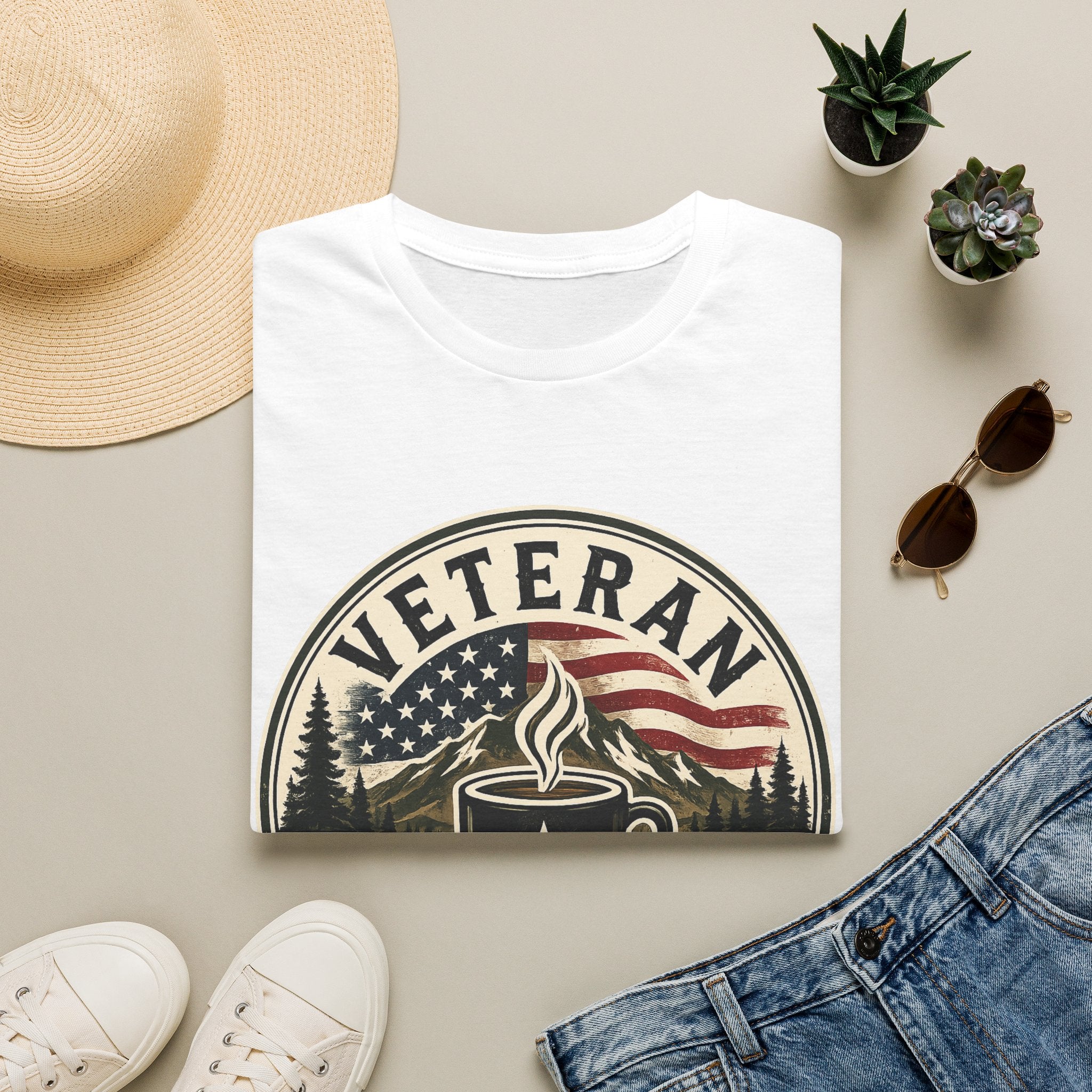

The veteran label is easy to print and hard to prove.
Veteran Beans is veteran-owned, and we roast in small batches from trusted growers worldwide.
Frequently Asked Questions
How can I tell if a business is veteran-owned?
Start with the business's own claim, then confirm it against an official source. Ask whether the owner is a veteran, a service-disabled veteran, or neither. Check the SBA VetCert database and SAM.gov for federal certification, and look for a state certification listing. A directory profile alone is not proof. If the business sells to the public, a short email asking which certification it holds is a fair and normal question, and a legitimate veteran-owned company will answer it directly.
Does a veteran-owned business need certification?
No. Any qualifying veteran can describe their business as veteran-owned without applying for certification. Certification matters when the business wants set-aside federal contracts or state-level veteran contracting preferences. The SBA's VetCert program is the route for VOSB and SDVOSB status, and it requires supporting documents on ownership and control. For everyday retail purchases, certification is optional, which is why buyers should ask what a brand actually holds rather than assuming a label means certified.
What is the difference between a VOSB and an SDVOSB?
A VOSB is a veteran-owned small business: at least 51% owned and controlled by one or more veterans. An SDVOSB is a service-disabled veteran-owned small business, where the 51% owner has a service-connected disability. SDVOSB status opens additional set-aside contracting opportunities. Both are verified through the SBA's VetCert system, and both require the owner to show ownership, control, and veteran status. The distinction matters most in government procurement, not in ordinary retail shopping.
How do I verify a veteran-owned business for a government contract?
Use the official systems rather than a directory. Confirm the business appears in the SBA VetCert database with active VOSB or SDVOSB status, and check that its SAM.gov registration is current and not expired. Review the firm's ownership and control documents, including the operating agreement and any provisions that could dilute the veteran's control. Confirm the NAICS code and small business size standard match the work. If a firm cannot be found in either system, treat the claim as unverified until it supplies documentation.
