
Last Updated: November 19, 2026
Quick Summary
Premium coffee is worth the cost when you can taste the difference black, because the real gap is often just 20 to 40 cents per cup, not dollars. Calculate cost per cup and run a blind tasting before you commit to an expensive bag.
- Ground coffee averaged $9.37 per pound in the US by January 2026, with the grocery coffee index up 18.5% year over year.
- Specialty grade coffee scores above 80 points on the industry's 100-point scale, while premium is only a marketing word.
- A 12-ounce bag at a 15-gram dose yields roughly 22 to 23 cups, not the 24 sometimes quoted.
- Going from 15 to 18 grams per cup raises your cost per cup by 20 percent at every tier.
- Buy one commodity and one fresh-roasted bag at a similar roast level, then brew and taste them blind, black.
Table of Contents
- The Real Price of Your Daily Cup
- What Is Specialty Grade Coffee?
- Cost Per Cup: Premium vs. Commodity Coffee
- The Benefits of Small-Batch Roasted Coffee
- How to Store Coffee Beans for Freshness
- Quality Indicators and Red Flags When Buying Beans
- Match Your Beans to Your Brewing Method
- Try a Blind Tasting Before You Commit
- Frequently Asked Questions
The Real Price of Your Daily Cup
Ground coffee averaged $9.37 per pound in the US by January 2026, and the grocery coffee index climbed 18.5% year over year against overall food inflation of just 2.9%, according to Bureau of Labor Statistics data reported by Kafiex Roasters. So is premium coffee worth the cost? At Veteran Beans, we think the honest answer is: sometimes, and the math tells you when.
Below, we break down what you actually pay for, how to calculate cost per cup, and how to test whether an expensive bag earns its price in your kitchen.
What the Grocery Aisle Hides
Supermarket coffee is priced to be predictable, not fresh. Bags sit in distribution for months, roast dates are often replaced by vague "best by" stamps, and blends are built to taste the same batch after batch. That consistency is a genuine engineering achievement. It is also why the coffee tastes flat: oxygen has been working on those beans since before they reached the shelf.
Commodity coffee is coffee traded as a bulk crop, graded for defect count and consistency rather than flavor nuance. It is the base of the vast majority of supermarket bags.
What Is Specialty Grade Coffee?
Specialty grade coffee is coffee that scores above 80 points on the 100-point scale used by the industry, judged on acidity, sweetness, and flavor profile, per University of California, Davis research published via PMC. That single threshold explains most of the price gap: above 80, beans are valued for how they taste, not just how many bags a farm can ship.
The Cup of Excellence program built its scoring system around exactly this link between quality scores and farm-gate prices, and research indexed on Cambridge Core confirms that material and symbolic quality attributes drive final market prices. In practice, a score of 84 and a score of 91 can come from the same country and still command very different money.
Here is the distinction most guides blur: specialty grade is a measurable standard. "Premium" is a marketing word. "Rare" is a scarcity claim. Only the first one tells you anything verifiable about the liquid in your cup.
Cost Per Cup: Premium vs. Commodity Coffee
Sticker price is the wrong number to compare. The number that matters is cost per brewed cup, and it changes with bag size, dose, waste, and how often you actually finish a bag before it goes stale. Here is the transparent math most guides skip.
The formula is simple: (bag price ÷ grams per bag) × grams per dose = cost per cup. A 12-ounce bag holds about 340 grams. A standard 15-gram dose for a 10-ounce pour-over yields roughly 22 to 23 cups per bag, not the 24 sometimes quoted, because a few grams cling to the grinder and brewer each time.
Run that across three realistic tiers:
- Commodity supermarket bag: $9.37 per pound (about 454 grams) at 15 grams per dose is roughly $0.31 per cup in green-bean terms, but most commodity bags are sold as 12-ounce packages at $6 to $9, which lands near $0.45 to $0.65 per cup once you account for a 5 to 10 percent waste from stale beans you throw out.
- Mid-tier specialty bag: $14 to $16 for 12 ounces at 15 grams per dose is roughly $0.62 to $0.71 per cup, with minimal waste if you finish the bag within a month.
- Premium small-batch bag: $18.99 for 12 ounces at 15 grams per dose is roughly $0.84 per cup, or about $0.79 if you stretch the dose to 14 grams.
That spread is smaller than most people expect. The gap between a $9 commodity bag and a $19 specialty bag is often 20 to 40 cents per cup, not dollars. For a two-cup-a-day drinker, that is roughly $146 to $292 a year at the low end and $438 to $584 at the high end, depending on which tiers you compare.
Dose size changes the math more than bag price does. Going from 15 grams to 18 grams per cup raises cost per cup by 20 percent at every tier.
Waste is the hidden variable. A $19 bag you finish in three weeks costs $0.84 per cup. The same bag left open for three months costs more per cup in real terms because the last third tastes flat and gets dumped. Buying smaller bags more often can beat buying large bags on sale, especially for single drinkers.
Brewing method shifts the value calculation too. Espresso uses 18 to 20 grams per double shot, so a 12-ounce bag yields only about 17 to 19 doubles. Batch brew at 60 grams per liter yields about 5 to 6 cups per liter, so a 12-ounce bag makes roughly 3.5 to 4 liters.
| Tier | Bag price | Bag size | Dose | Cups per bag | Cost per cup |
|---|---|---|---|---|---|
| Commodity | ~$9.37/lb | 16 oz | 15 g | ~30 | ~$0.31 to $0.65 |
| Mid-tier specialty | ~$15 | 12 oz | 15 g | ~22 | ~$0.68 |
| Premium small-batch | ~$18.99 | 12 oz | 15 g | ~22 | ~$0.84 |
Cost per cup
The honest conclusion: premium coffee costs more per cup, but the difference is often a few dimes, not a few dollars. Whether those dimes are worth it depends on whether you can taste the difference black, which the blind tasting section below addresses.
The Benefits of Small-Batch Roasted Coffee
Small-batch roasting means coffee is roasted in quantities small enough to be sold while it is still fresh, rather than produced in volumes that sit in warehouses. The practical benefit is not romance: it is that you receive beans weeks after roasting instead of months.
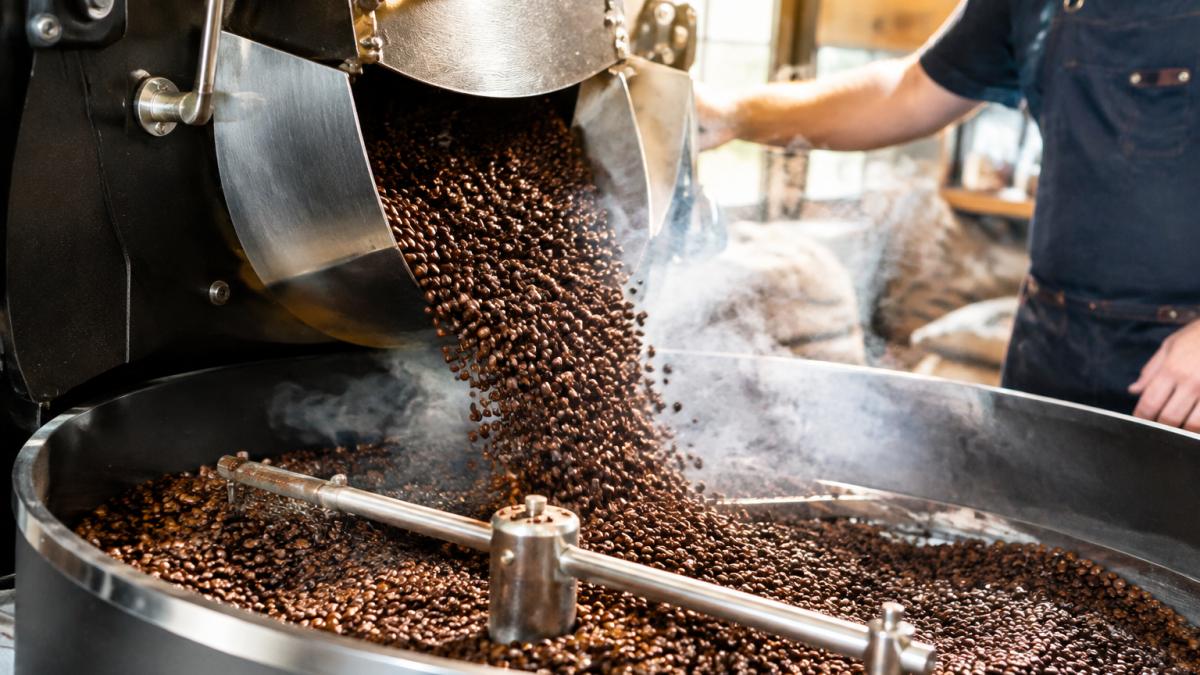
That timing matters because roasted coffee begins losing aromatics almost immediately. At Veteran Beans, we roast in small batches. If you want the fuller case, our breakdown of the benefits of small-batch roasted coffee covers how batch size affects consistency and flavor development.
The trade-off is real: small-batch coffee costs more per bag and sells out more often. Seasonal flavors in particular move fast.
How to Store Coffee Beans for Freshness
If you pay a premium for fresh-roasted beans, storage is where that premium is either protected or wasted. Roasted coffee stales through three mechanisms: oxidation from oxygen, degassing of carbon dioxide that carries aromatics away, and moisture migration that dulls acidity. Each one accelerates with heat, light, and air exposure.
Store coffee in a sealed container away from heat and light.
If you want a fuller method for judging freshness, see how to tell if coffee is fresh.
Quality Indicators and Red Flags When Buying Beans
A roast date is the single most useful thing on a coffee bag. If a bag has only a "best by" date, assume the roast happened months ago. That one check filters out most of what you should not buy.
Green flags:
- A printed roast date, ideally within the last three weeks
- A named origin or farm, not just "100% Arabica"
- A described processing method, such as washed or natural
- Roast level matched to your brew method
Red flags:
- No roast date anywhere on the packaging
- Lifestyle branding doing all the work, with no origin detail
- Oily, shiny beans in a light roast, which usually signals age
- Prices inflated by packaging rather than traceability
That last point is the contrarian one: price does not always equal quality. Some brands charge a premium for design and story rather than the beans, a point critics of premium coffee pricing have made repeatedly. A thoughtfully composed blend can outperform a fashionable single-origin at the same price, which is why we point readers toward our 6 Bean Blend when they want to judge quality across several profiles at once.
Match Your Beans to Your Brewing Method
The right bean depends on how you brew, not on how much it costs. A $30 light roast can taste thin and sour in a drip machine, while a $19 dark roast can shine in the same brewer. Match first, spend second.
- Drip machine: medium to dark roasts, balanced blends. Forgiving and consistent.
- Espresso: medium-dark roasts with low acidity, ground fine and fresh.
- Pour-over: light to medium single-origins, where acidity reads as brightness.
- French press: medium-dark roasts with body, since the mesh filter keeps oils in.
If you drink your coffee black, flavor defects are exposed with nowhere to hide, so buy the freshest beans you can find and grind just before brewing. Our guide to the best coffee beans for black coffee drinkers goes deeper on matching roast profile to taste. Bold dark roasts like a French roast suit black drinking well, while flavored blends tend to work better with milk.
Try a Blind Tasting Before You Commit
The fastest way to settle the premium question is a blind tasting at home, and it costs less than one bag you might regret. Brew two coffees side by side, same method, same dose, same water, and have someone else label the cups A and B.
Run it in four steps:
- Buy one commodity bag and one fresh-roasted bag at a similar roast level.
- Brew both identically: same grind, same water temperature, same ratio.
- Taste blind, black, and write down three words for each cup.
- Repeat the next morning before deciding.
Most people find the difference obvious in black coffee and much smaller in a milky drink. That result tells you exactly where your money should go. If you want to test several profiles without committing to full bags, our Flavored Coffees Sample Pack is built for exactly this kind of side-by-side comparison.
The honest challenge is this: premium coffee only pays off if you can taste the difference in your own cup, and you cannot know that from a label. Buy fresh, buy traceable, and test before you commit to a subscription or a case. Veteran Beans roasts in small batches, prints roast dates, and sources from trusted growers, so you can run that test with coffee that is actually fresh. Get started with Veteran Beans and find the roast that earns its place in your morning routine.
Frequently Asked Questions
What makes coffee beans premium?
Premium coffee usually means beans that score above 80 on the 100-point specialty scale, which assesses acidity, sweetness, and flavor profile. That score reflects how the coffee was grown, processed, and roasted. Premium beans are also typically sold with a visible roast date and traceable origin, not just a fancy bag. Price alone does not prove quality, so check the score, the roast date, and the sourcing story before you pay more.
Does expensive coffee taste better than grocery store brands?
It often does, but not automatically. Freshness matters as much as price: coffee that sat on a shelf for months loses aroma and flavor complexity no matter what it cost. Some brands charge a premium for packaging and lifestyle marketing rather than bean quality. A blind tasting at home is the only reliable way to know what your palate prefers.
Is premium coffee worth it for milk-based drinks?
It depends on how much flavor you want to taste through the milk. A bold dark roast with low acidity, like a French Roast, holds its own in lattes and cappuccinos. Delicate single-origin beans with bright tasting notes get lost under cream and sugar. For milk drinks, spend on freshness and a roast profile that suits dairy, and save the rare, complex beans for black coffee.
How does small-batch roasting affect coffee quality?
Small-batch roasting can give the roaster tighter control over each batch. Mass-market coffee is often roasted in huge volumes and warehoused for months. The benefits of small-batch roasted coffee show up most clearly in the first few weeks after the roast date printed on the bag.
